

Exfoliation. The step your body is waiting for.
Most people think of body exfoliation as a luxury. A spa day thing. Nice to do occasionally, not essential.
That's the wrong way to think about it.
Exfoliation is arguably the most functional step in body care — not because of how it feels in the moment, but because of what it makes possible for everything that comes after it.
What's Actually Happening on the Surface of Your Skin
Your skin renews itself constantly. In your 20s, a full skin cell turnover cycle takes roughly 28 days. By your 30s and 40s, that slows to 40–50 days. By your 50s, it can take over 60 days.
What this means practically: dead skin cells that should be shedding are staying on the surface longer. They accumulate. They build up — particularly on areas covered by clothing, where friction prevents natural shedding. Areas like the back of the arms, the backs of thighs, the knees, the elbows.
That buildup shows up as:
-
Rough, uneven texture
-
Dullness — skin that looks tired even when it isn't
-
Strawberry skin — those small dark bumps on the thighs and arms caused by clogged follicles
-
Congestion and body breakouts
-
Products that sit on top of skin rather than absorbing
None of this is about hygiene. This is simply skin biology slowing down — and exfoliation is the tool that helps it along.
What Exfoliation Actually Does
It removes the barrier that blocks everything else.
This is the most underappreciated function of exfoliation. When you apply a body lotion, a firming treatment, or an elasticity-supporting formula onto skin covered in dead cell buildup — the active ingredients in those products cannot penetrate effectively. They're sitting on top of a layer that was supposed to shed weeks ago.
Exfoliation removes that barrier. It primes the skin to actually receive and absorb what you apply next. This is why exfoliation isn't just a stand-alone step — it multiplies the effectiveness of everything else in your routine.
It stimulates cell turnover.
When dead cells are removed, the skin is signalled to produce new ones faster. Exfoliation essentially nudges a slowing biological process back into gear. The result is skin that behaves more like younger skin — brighter, smoother, more even in tone.
It helps with ingrown hairs and follicle congestion.
In areas prone to waxing or shaving, dead cell buildup traps hair beneath the surface, causing ingrown hairs and rough, bumpy texture. Regular exfoliation keeps follicles clear and reduces this significantly.
It improves the texture of stretch marks and rough skin patches.
Exfoliation doesn't treat stretch marks structurally — that requires targeted actives that work in the dermis. But it does improve surface texture and tone around stretch marks, making them less visually prominent and helping treatments absorb better.
Physical vs Chemical Exfoliation for the Body — What's the Difference?
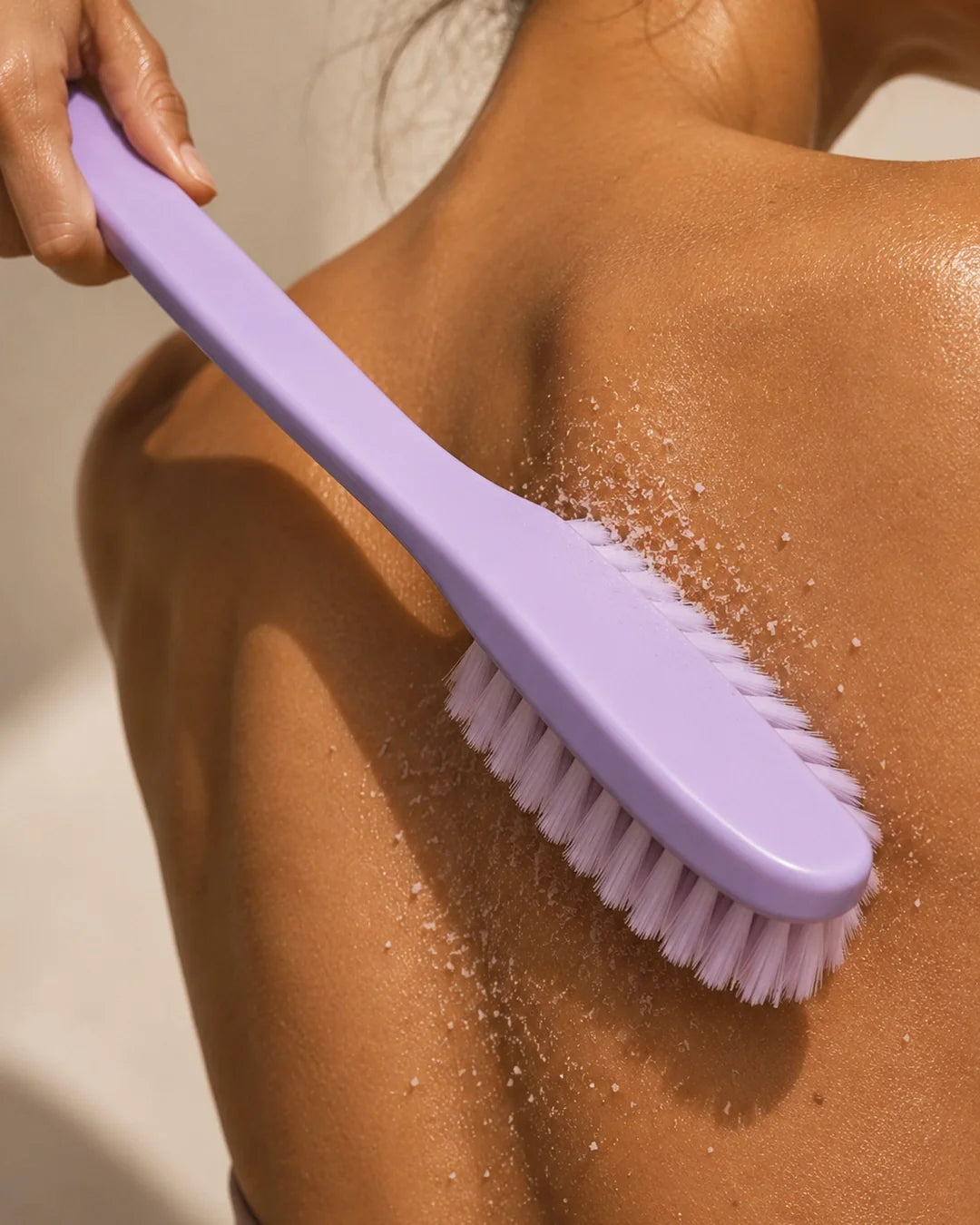
Physical exfoliation uses texture — scrub particles, grains, or a loofah — to manually lift away dead cells. It's immediate, satisfying, and effective for most body skin. The key is using a formula where the particles are smooth and rounded, not jagged or sharp, which can create micro-tears rather than remove buildup.
Chemical exfoliation uses acids — typically AHAs like glycolic or lactic acid — to dissolve the bonds between dead cells, encouraging them to shed. It's gentler, more even, and particularly good for sensitive or reactive skin. It's less common in body care but growing, particularly for concerns like strawberry skin and body pigmentation.
For most people, a well-formulated physical body scrub used 2–3 times a week is the most practical, effective approach.
The Right Way to Exfoliate Your Body
How often: 2–3 times a week for most people. Daily exfoliation compromises the skin barrier — it strips away the protective layer that healthy skin needs. More is not better.
When: In the shower, on damp skin. The warmth opens pores slightly and softens the skin surface, making exfoliation more effective and more comfortable.
How: Gentle, circular motions — not vigorous scrubbing. You are lifting dead cells, not sanding a floor. Over-exfoliation causes redness, sensitivity, and barrier damage.
After: Moisturise while skin is still slightly damp. This is when the barrier you've just cleared is most receptive to hydration and active ingredients. This is when your body care products do their best work.
Where to focus: The backs of arms, thighs, knees, elbows, and back — areas that are covered by clothing most of the day and have the highest buildup. Also ankles and heels, which accumulate dead skin faster than anywhere else.
What You Shouldn't Do
Use the same physical scrub every single day — this disrupts the barrier and causes sensitivity over time.
Use harsh, grainy scrubs with sharp particles like crushed shells or irregular crystals — these scratch rather than exfoliate.
Exfoliate immediately after shaving or waxing — skin is too sensitised. Wait 24–48 hours.
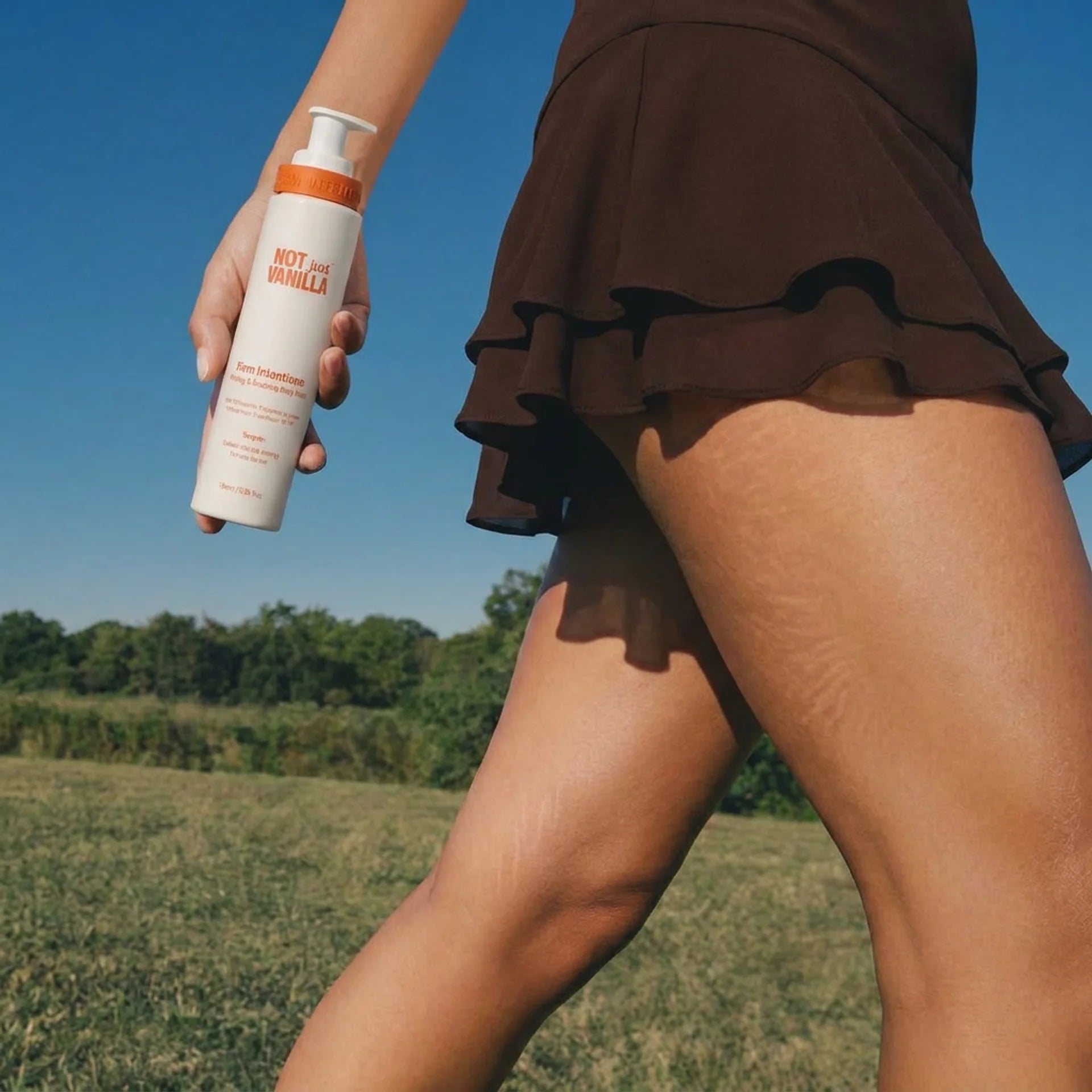
Expect exfoliation alone to treat structural concerns — stretch marks, cellulite, elasticity loss. Exfoliation improves surface texture and maximises product absorption, but treating structural concerns requires actives that work deeper. These are complementary, not interchangeable.
Frequently Asked Questions
Does exfoliating help with stretch marks? Exfoliation improves the surface texture of the skin around stretch marks and helps treatments absorb better — but it doesn't structurally treat stretch marks. For that, you need actives that work in the dermis, like Striover™ and Exo-T™.
Does exfoliating help with strawberry skin? Yes. Strawberry skin (keratosis pilaris) is largely caused by keratin buildup blocking hair follicles. Regular, gentle exfoliation is one of the most effective ways to reduce it over time.
Can I use a face scrub on my body? Technically yes, but it's not ideal — face scrubs are formulated for thinner, more sensitive facial skin. Body skin is thicker and needs more targeted exfoliation. A body-specific formula with the right particle size and actives will be more effective.
Should I exfoliate before or after shaving? Before. Exfoliating first removes the dead cell buildup that causes ingrown hairs and gives you a smoother surface to shave on. Never exfoliate immediately after — wait at least a day.
Is exfoliation safe during pregnancy? Physical exfoliation is generally considered safe during pregnancy. Always check with your doctor regarding specific chemical exfoliants or actives if you're pregnant.
Exfoliation is not a luxury step. It is the step that makes all your other body care actually work.
Smooth texture. Better absorption. More radiant skin. It starts here.
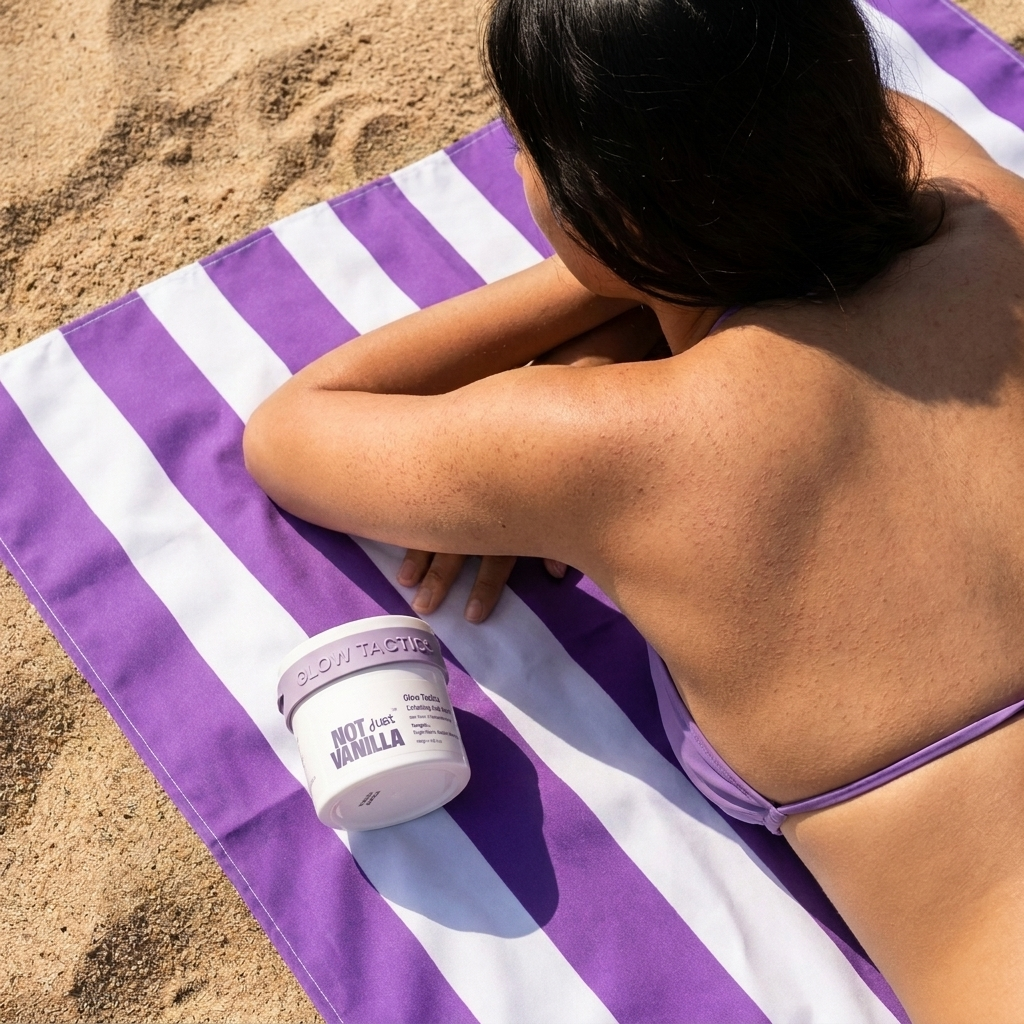
Explore Glow Tactics — Exfoliating Body Scrub →
Read more
Somewhere along the way, body care became overwhelming. One product for cellulite. One for stretch marks. One for exfoliation. One for hydration. One for body acne. One for tightening. One for glow...
Walk into any pharmacy or beauty store in India and read the back of a body lotion. You'll see the same names, over and over. Shea butter. Cocoa butter. Aloe vera. Glycerine. Vitamin E. Maybe cocon...